Lekhak (लेखक)
Lekhak is an AI writing assistant designed specifically for the Indian market, addressing the unique needs of bilingual creators who code-switch between English and Hindi.
SaaS
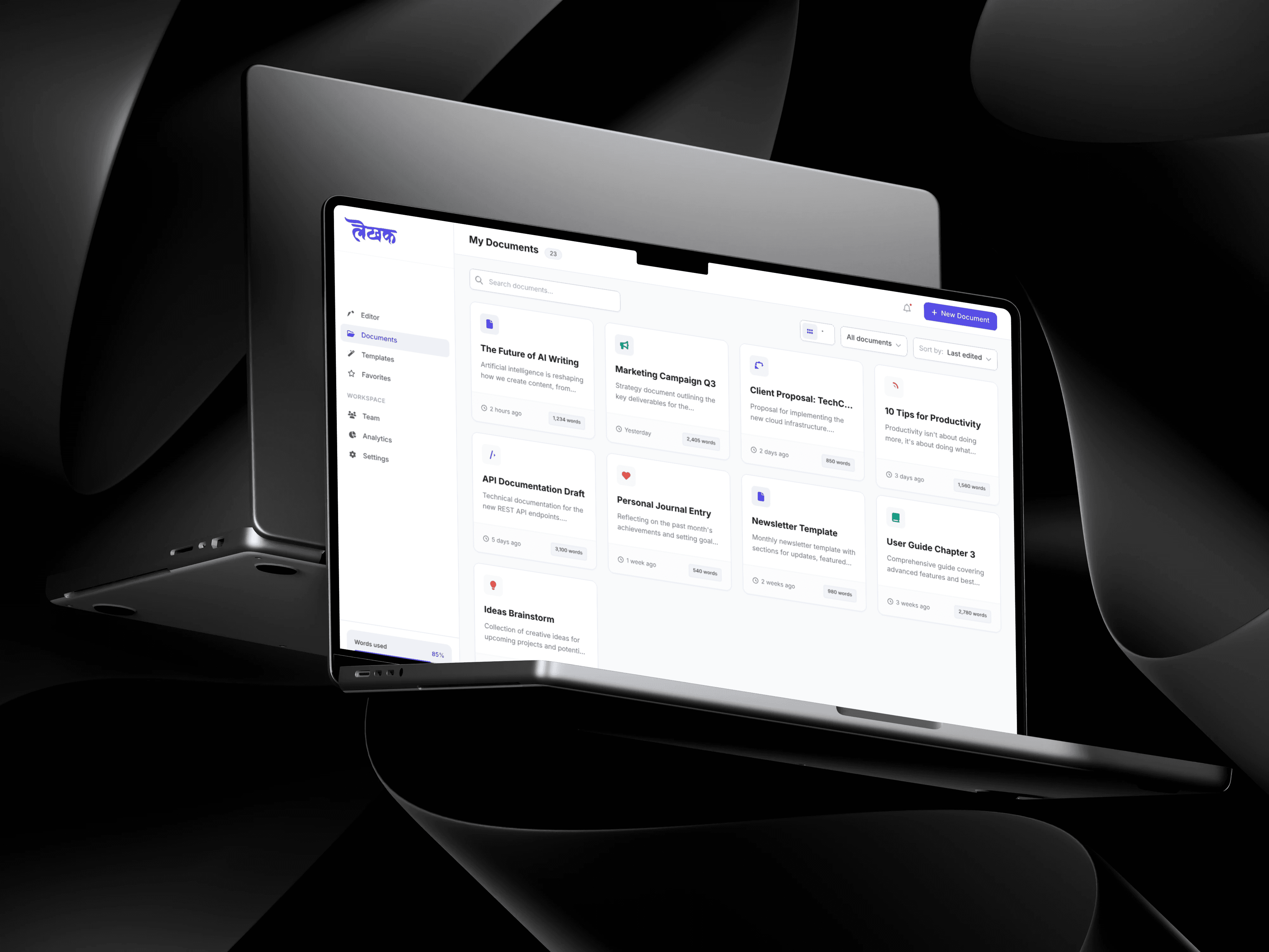
Project Overview
Role: Product Designer (Solo Project)
Duration: 6 hours (Design Sprint)
Tools: Figma
Year: 2024
The Problem
Indian content creators, students, and marketers naturally code-switch between English, Hindi, and regional languages while writing. But existing AI writing tools like Jasper and Copy.ai are:
English-only - Don't understand Hinglish or regional languages
Expensive - $50/month (₹4000+) is unaffordable for most Indian users
Culturally disconnected - Built for Western audiences, ignore Indian context
Black-box AI - Users fear losing their authentic voice
"I think in Hindi, outline in Hinglish, but need to deliver in professional English. No tool understands my workflow." - User Interview Insight

Design Solution
Lekhak is India's first multilingual AI writing assistant that celebrates code-switching while making professional writing accessible at ₹499/month.
Core Features
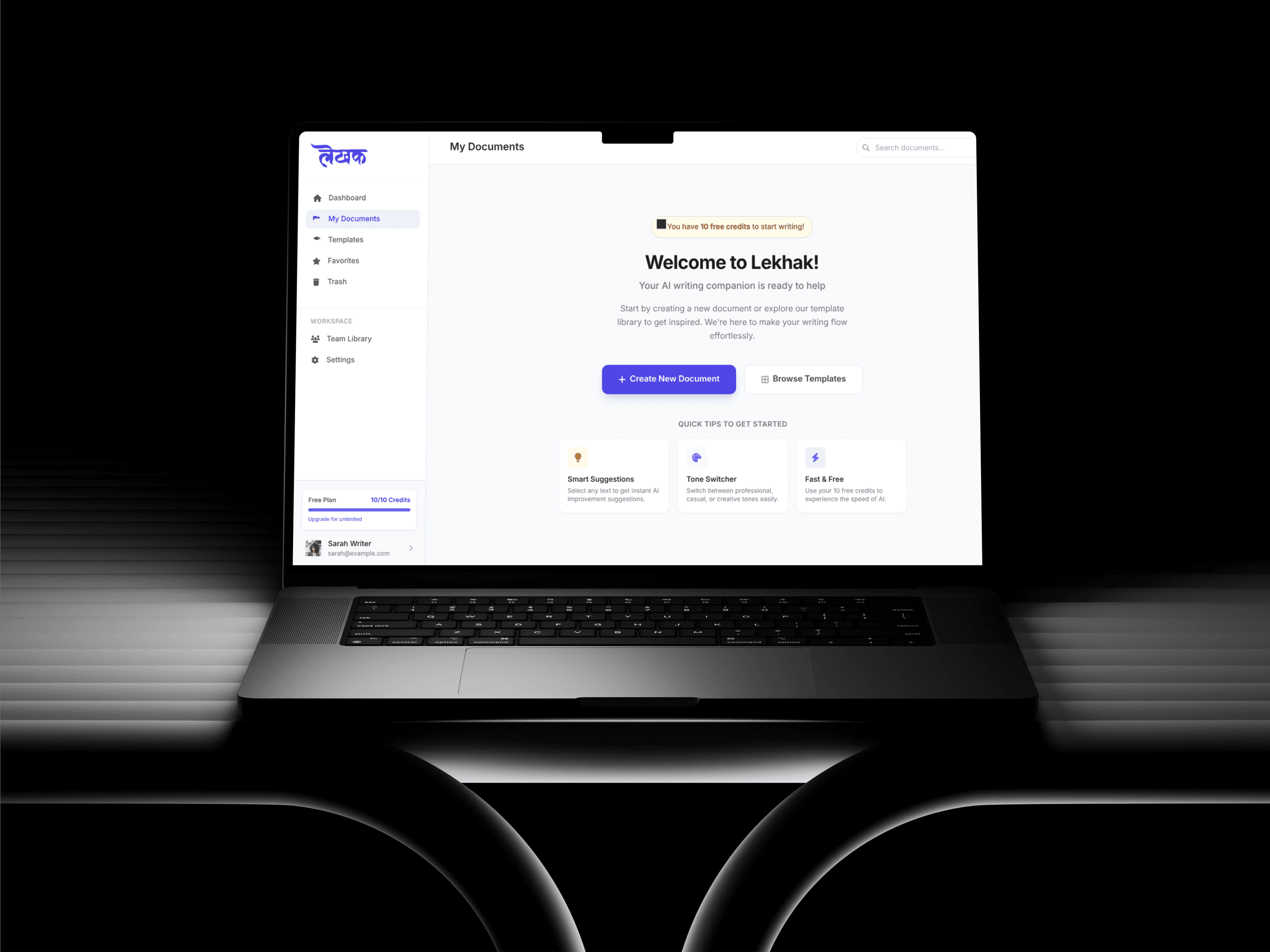
1. Multilingual Smart Editor
Seamlessly switch between English, Hindi, and Hinglish mid-sentence
AI understands context across languages (e.g., "Meeting ko postpone karna padega" generates professional suggestions in either language)
Devanagari script fully supported with proper rendering
2. Cultural Tone Intelligence
Professional (Business English)
Conversational (Natural Hinglish)
Formal Hindi (Government/Academic)
Regional styles (Adapts to user's location)
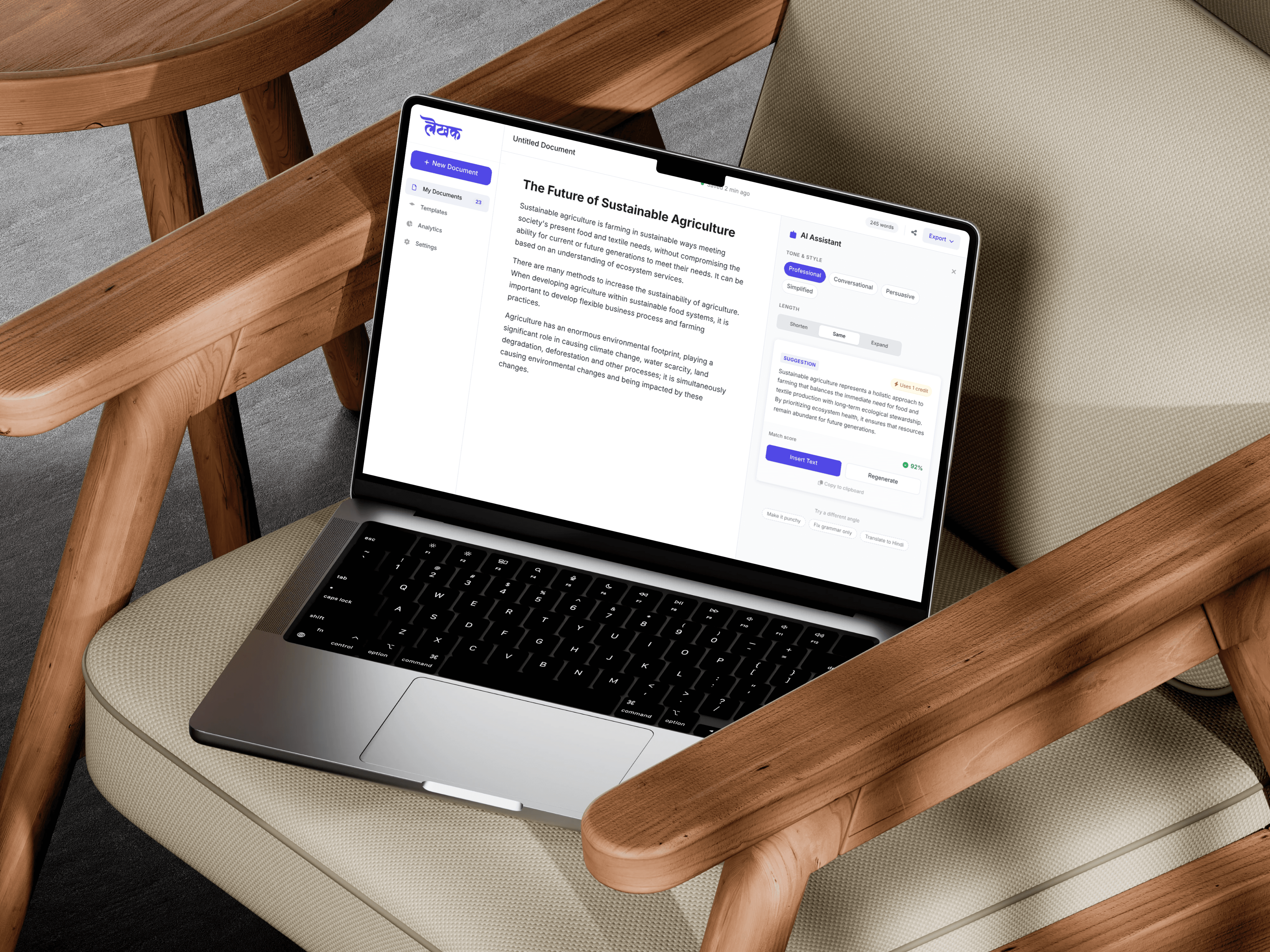
3. Transparent AI Collaboration
Split-pane editor: Original text (left) vs AI suggestions (right)
Users see exactly what changed and why
"Match Score" shows how well AI preserved user's voice (e.g., "92% match")
4. Affordable Credit System
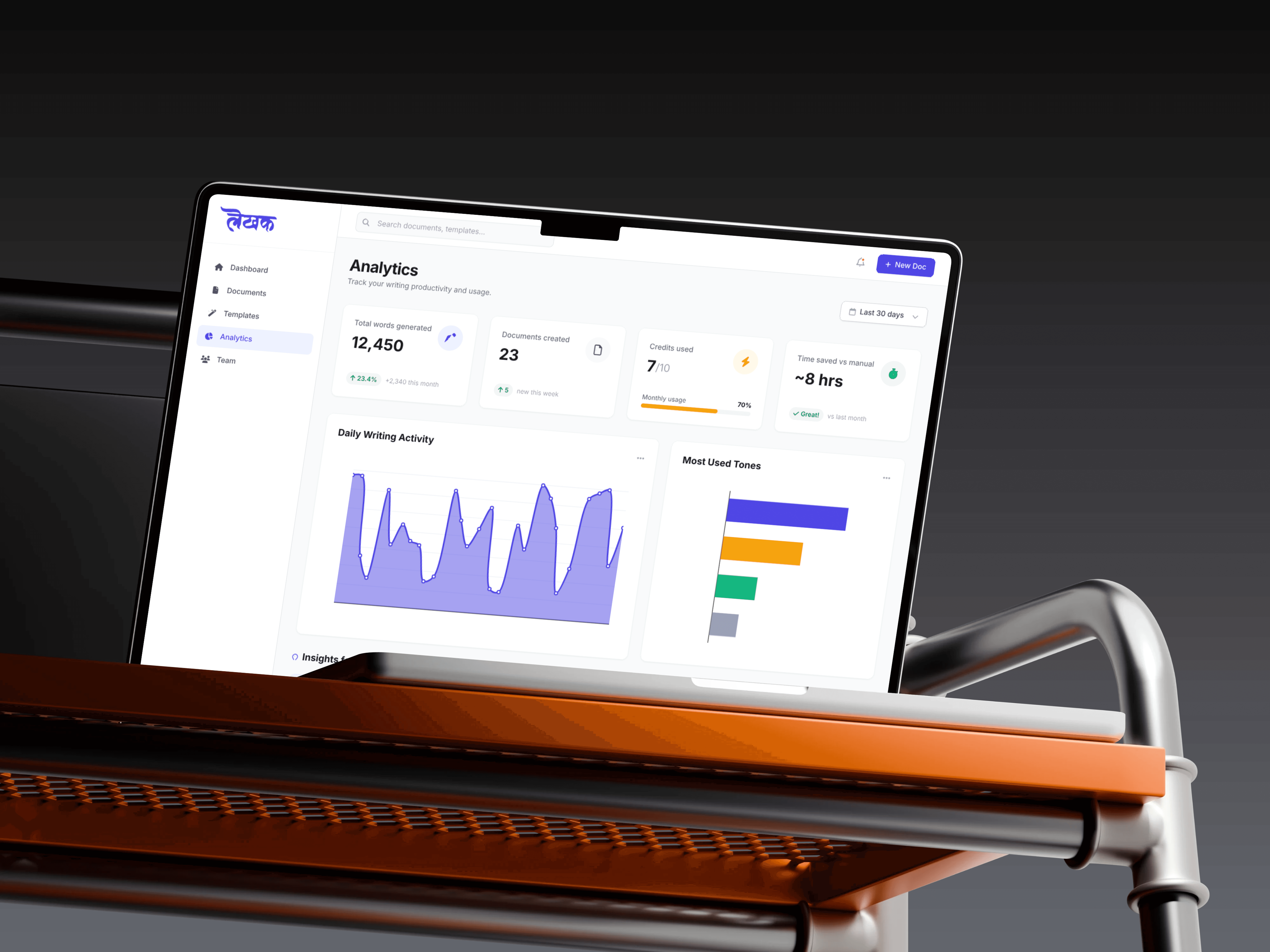
Free: 10 AI generations/month
Pro: Unlimited for ₹499/month (vs competitors at ₹4000+)
Clear pricing in rupees, supports UPI/Cards/Net Banking
Key Design Decisions
Decision 1: Split-Pane Editor
Why?
Users feared AI would "take over" their voice. Side-by-side view builds trust by showing exactly what AI changed.
Alternative Considered: Inline suggestions (Grammarly-style)
Why Rejected: Users wanted full context before accepting changes
![Editor mockup showing original text left, AI suggestions right]
Decision 2: Language Switching in Real-Time
Why?
Indian creators don't write in one language—they code-switch naturally. Making them choose "English" or "Hindi" upfront breaks their flow.
How it works:
User types: "Meeting आज 5 baje रखते हैं?"
AI detects mixed language and offers suggestions in:
Option A: "Let's schedule the meeting today at 5 PM" (Professional English)
Option B: "Meeting आज शाम 5 बजे रख लेते हैं" (Formal Hindi)
Option C: Same Hinglish style, just refined grammar
![Language detection demo showing mixed script text]
Decision 3: Cultural Tone Presets
Why?
"Professional" means different things across languages. Indian users need:
Business English (formal, global)
Conversational Hindi (warm, regional)
Hinglish Professional (modern, relatable)
Alternative Considered: Single "tone dial" from casual to formal
Why Rejected: Doesn't account for language-specific cultural norms
![Tone selector showing language-aware options]
Decision 4: Transparent Pricing in Rupees
Why?
Dollar pricing feels foreign and expensive after conversion. Showing ₹499 upfront vs "$6.99 (₹580 + taxes)" builds trust.
Psychological pricing:
Free: 10 credits (enough to evaluate value)
Pro: ₹499/month (less than ₹17/day = "cost of one chai")
Anchor: "Save ₹3500/month vs Jasper"
![Pricing comparison: ₹499 vs competitors at ₹4000+]
What I Learned
1. Localization ≠ Translation
Adding Hindi labels isn't enough. True localization means:
Understanding code-switching patterns
Respecting cultural tone differences
Pricing for local purchasing power
Supporting local payment methods (UPI)
2. Trust Requires Transparency
Split-pane editor wasn't just aesthetic—it solved the core fear: "Will AI erase my voice?" Showing before/after side-by-side built confidence.
3. Constraints Drive Innovation
Limited budget (₹499 vs ₹4000 competitors) forced creative solutions:
Credit system creates perceived value
Templates drive activation without costly onboarding
Freemium model balances access + monetization
4. Accessibility = Better UX for Everyone
Designing for:
Low-end devices → Faster load times for all
Screen readers → Clearer information architecture for all
Keyboard navigation → Power user shortcuts for all
Reflection
This project taught me that design is as much about what you respect as what you create.
Respecting that:
Indian users are multilingual by default, not English-only
₹499 ≠ $6.99 in psychological value
Devanagari deserves equal design treatment as Latin script
Cultural context affects what "professional" or "casual" means
The biggest validation would be hearing a user say: "Lekhak feels like it was made for MY brain, not translated from Silicon Valley."
That's the bar for culturally intelligent design.